I love talking to people about design, especially in person. That's where I can read the other person's understanding or engagement through body language, facial expression, the questions they ask, and so on. I can change my approach, switch up how I present the design, and focus on what matters most for that person. Communicating the design becomes a design challenge of its own, shaped by the context.
Unfortunately, I don't have the luxury of talking with every single person that comes across this portfolio, but I know where my strengths lie, and I know what my goal is. So here's how I went about solving the age-old design challenge of the portfolio.
- Figure out what problem I'm really solving
- Using a layout to achieve my goal
- Using content to play to my strengths
- Being OK with being wrong
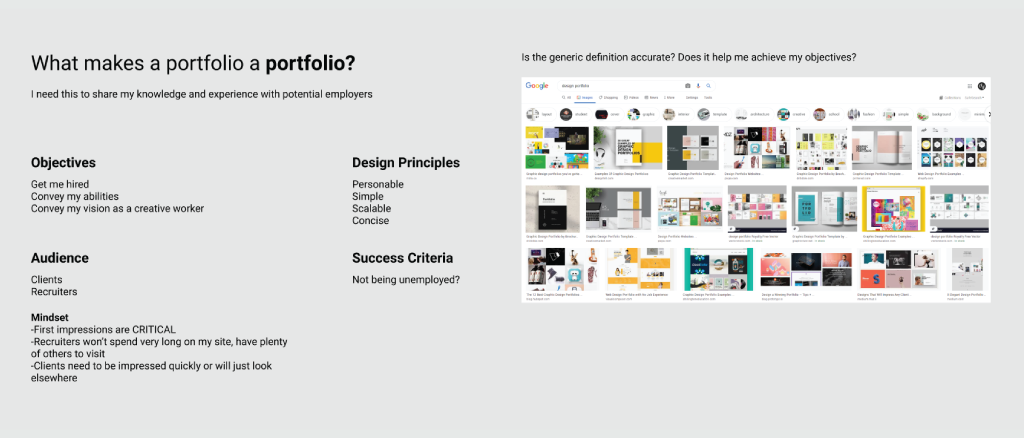
Figure out what problem I'm really solving
There are plenty of hired designers out there today, so how did they do it? Like any good problem, this called for a design brief. How am I going to validate whether this helps me achieve my objective? Who is going to come to this site, and what will they be looking for? Through interviews with recruiters, study of existing platforms like Medium, and research into other designers' portfolios, I collected enough data to give myself a problem statement, design principles, and an idea of my real user.
Don't rebuild what already exists, but learn why it works
How might I showcase who I am and the work I'm able to do? My user, a recruiting manager, is someone who goes through designers faster than I go through tea (that's really fast — you're learning about who I am already), so I'll need to be succinct, but emotive. Personality plays a big role in a successful designer, and I want to make sure I share that. Even though I'll be mostly showing work I've already done, what my user really cares about is what I can do for their company, and I'll need to be aware of this when choosing what to share.
Outcomes
- Problem statement to validate solutions against
- Design principles to inform wireframes
- User journey to give design structure
Using a layout to achieve my goal
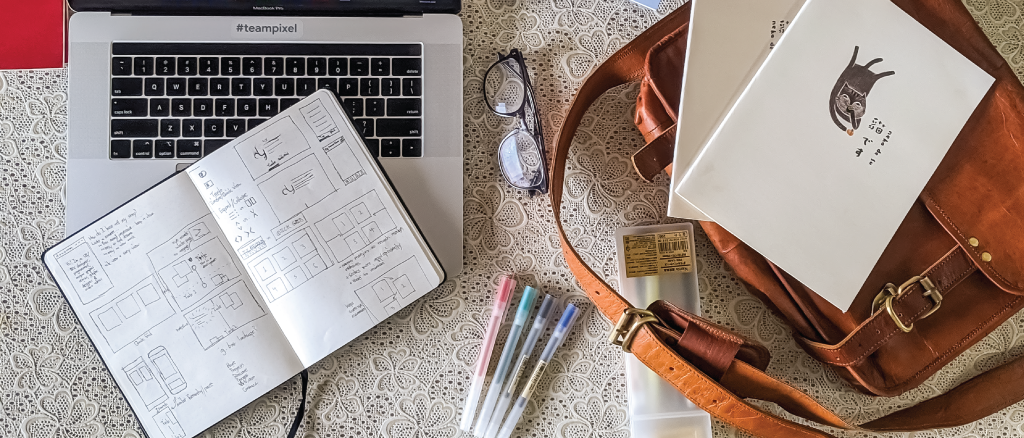
It'd be easy enough to just open up Squarespace, type in "Portfolio," and call it a day. Some of those templates are very well made, but I wanted to discover for myself what made them portfolio templates. Also, now I can put "React Developer" on my resume. Before building out the layout, I mapped out the core actions the website would need to perform, based on my earlier research. This started with 3 — Resume, View Work, and Contact — and grew to 4 when I wanted to differentiate myself with a real About Me section.
Make it easy and look good doing it
Seeing that my website had a small number of core actions, I wanted to make them accessible from anywhere on the site, at any time. This led to the current global top nav, and a global bottom nav on mobile. Going back to making things succinct and easy, I kept the design language very simple and clean. While doing my research, I used a highlighter to mark up things I liked and ended up really liking the way it looked — leading to the bright yellow accents here.
Outcomes
- Simple and clean design system
- Always-present global navigation system
- Medium-esque content presentation
Using content to play to my strengths
One of the biggest challenges I face as a designer is being confident in my documentation. Did I present all the information needed to justify my decision? Am I putting in too much irrelevant detail, or too little? I've always felt more confident sharing my designs in person, where I can discuss and converse. The reality is that any designer's work is only as good as their ability to communicate it. That includes documentation, and even this portfolio.
Keep it human and keep it brief
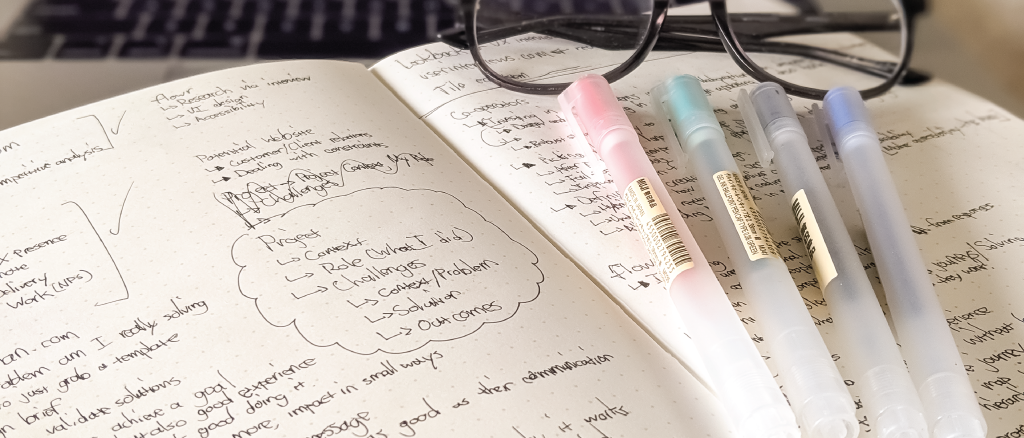
I came up with a system that lets me summarize my learnings in an easy-to-follow way. You may have noticed all of these points follow a pattern: problem, how I tackled it, and what happened as a result. On top of that, I try to write the way I would talk about these projects. After all, this is my portfolio — who says it needs to be a formal essay?
Outcomes
- Design heuristics for portfolio content
- Cohesion across different portfolio entries
- Confidence to write in a more spoken way
Being OK with being wrong
One of the toughest concepts for me as a designer and artist is "good-enough is good-enough." I can't have all the answers. There are so many tools and ways to get feedback once you present the design to other people. Projects without deadlines are paralyzing and lead to a fruitless journey toward perfection. Part of what makes good designers so great, in my opinion, is their ability to work within deadlines and constraints.
Validate with others and keep moving forward
Crazy that putting this online for others to see doesn't mean I can't just change it in the future! It sounds simple writing it out, but this was a big mental challenge for me to overcome. I'm proud of how far my portfolio has come since opening up to friends, mentors, and general feedback from anyone willing to give it.
Outcomes
- Personal growth as a designer
- Iterative design that is continually improved upon
- Better designs achieved faster by getting real feedback sooner